Drilling water borewells is a critical task for agricultural irrigation, municipal water supply, and industrial processes.
However, drilling through loose sand, gravel, and clay layers presents significant geotechnical challenges. Without the proper drilling additives, drill operators face stuck drill pipes, high fluid loss, and collapsed boreholes.
Using high-grade bentonite for borewell drilling helps stabilize the wellbore, improve drilling efficiency, and reduce operational costs.
This article covers the role of bentonite in borewell drilling and explains how it stabilizes borehole excavations.
Borewell Drilling Challenges
Borewell drilling operators face several common downhole challenges:
- Unconsolidated Formations: Loose sand and gravel layers tend to cave in, trapping the drill string.
- Fluid Loss: Water can seep out of the borehole into dry, porous sands, leaving thick mud solids that cause pipe sticking.
- Friction and Heat: The rotating drill bit generates extreme friction and heat, accelerating wear on drilling tools.
- Cuttings Settling: When flow is interrupted, cuttings can sink back down, packing around the drill bit and trapping it.
Role of Bentonite
Bentonite clay is a natural swelling mineral composed primarily of montmorillonite.
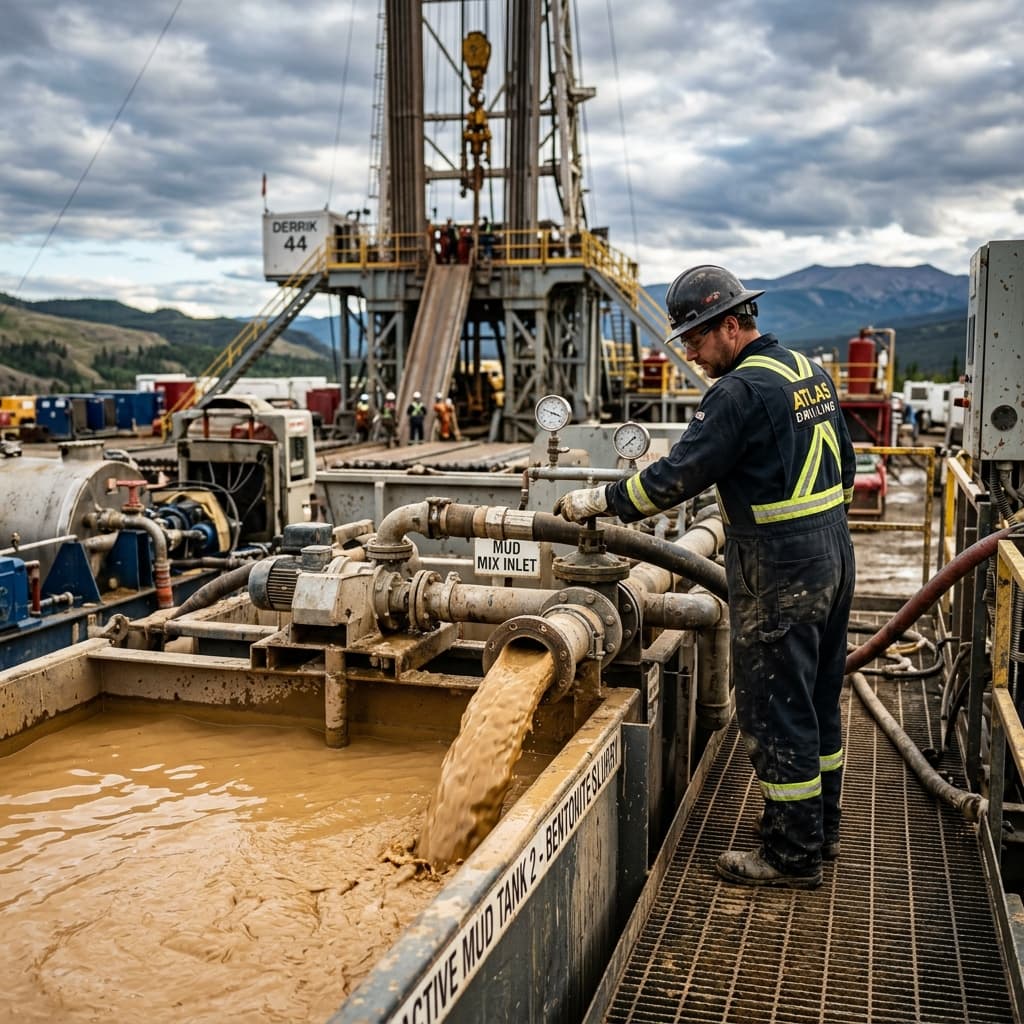
When added to water, the clay platelets disperse and expand, converting plain water into a viscous, thixotropic slurry.
This slurry provides the carrying capacity, wall sealing, and lubrication needed to overcome geotechnical challenges and ensure a successful drilling operation.
Mud Formation
When bentonite is mixed with water, it forms a drilling mud with unique flow characteristics:
- Viscosity Control: It thickens the water, allowing the mud to transport rock cuttings out of the borehole.
- Filter Cake Sealing: The flat clay platelets plaster the porous walls of the borehole, forming a thin, impermeable filter cake. This cake seals the borehole wall, preventing fluid loss into surrounding formations and keeping the drilling mud at its target density.
Lubrication Benefits
The rotation of the drill string against the rock generates significant friction.
Bentonite mud acts as a lubricant, coating the drill pipe and the borehole wall.
This lubrication reduces torque, minimizes wear on the drill bits, and lowers the energy required to spin the drill string, extending tool life.
Hole Stabilization
Bentonite mud prevents hole collapse through hydrostatic pressure and wall sealing:
- Hydrostatic Balance: The weight of the mud column exerts outward pressure against the borehole walls, counteracting soil and groundwater pressures.
- Structural Binding: The clay slurry penetrates loose sand and gravel formations, binding the loose grains together and forming a stable wall.
Cost Savings
Using high-quality bentonite mud saves time and money:
- Fewer Stuck Pipes: Proper lubrication and cuttings suspension prevent stuck pipes and tool losses.
- Faster Penetration Rates: Clean, lubricated drill bits cut through rock faster, reducing fuel consumption and labor costs.
- Less Water Consumption: Minimizing fluid loss into porous formations reduces the volume of water needed to complete the well.
Conclusion
Bentonite is an essential additive for borewell drilling, providing the viscosity, wall sealing, and lubrication needed to ensure a stable borehole and successful water delivery.
Marjaan Minerals manufactures premium drilling-grade bentonite designed for borewell applications, helping operators achieve faster drilling times and lower operational costs.