

Bentonite Earthing Compound: Properties and Applications
In electrical grounding systems, achieving low and stable earth resistance is essential for safety and reliable performance. Conventional soil backfill often fails in dry, sandy, rocky, or high-resistivity soils. This is where bentonite earthing compound becomes a proven solution.
Bentonite earthing compound is a specialized sodium-based clay material used as a ground enhancement backfill around earth electrodes. It significantly improves conductivity, maintains moisture, and ensures long-term system reliability.
This guide covers the definition, composition, key properties, applications, advantages, and important specifications of bentonite earthing compound.
Definition of Earthing Compound
An earthing compound (also called ground enhancement material or GEM) is a conductive backfill material placed around earth rods, plates, mats, or horizontal conductors. Its primary purpose is to reduce the contact resistance between the electrode and the surrounding soil, thereby lowering the overall earth resistance of the grounding system.
Bentonite earthing compound is a natural, non-corrosive, moisture-retaining clay specially processed for this application. Unlike chemical compounds that can leach away over time, bentonite remains stable and effective for many years.
Composition
Bentonite earthing compound is primarily composed of sodium montmorillonite (a high-swelling clay mineral). High-quality grades typically contain:
- High percentage of montmorillonite (the active mineral responsible for swelling and water retention)
- Controlled moisture content
- Minimal grit and impurities
- Sometimes mild activation to enhance sodium content and performance
It is supplied as fine powder or granules and is mixed with water (or occasionally with soil) before installation.
Swelling Capacity
One of the most important properties of bentonite earthing compound is its exceptional swelling ability.
When mixed with water, sodium bentonite can swell to 10–15 times its original dry volume. At around 5–6 times its dry volume, it forms a dense, paste-like consistency that:
- Fills all voids around the electrode
- Creates intimate contact with both the electrode surface and the surrounding soil
- Increases the effective diameter of the earth electrode
This volumetric expansion is a key reason bentonite outperforms ordinary soil or sand backfill.
Moisture Retention
Moisture is the dominant factor controlling soil resistivity. Dry soil has very high resistance, while moist soil conducts electricity far more effectively.
Bentonite earthing compound acts as a permanent moisture reservoir:
- It can absorb up to five times its own weight in water
- It retains this moisture for extended periods, even during dry seasons
- It draws additional moisture from surrounding soil and rainfall
This hygroscopic nature keeps the zone around the electrode consistently conductive, reducing seasonal fluctuations in earth resistance.
Conductivity and Contact Resistance
Hydrated bentonite earthing compound typically achieves a resistivity in the range of 2–5 Ω·m, which is significantly lower than most native soils.
By surrounding the electrode with this low-resistivity material:
- Contact resistance between the metal electrode and the soil is greatly reduced
- The effective surface area of the electrode increases
- Overall earth resistance of the system drops substantially (often by 30–70% depending on soil conditions)
The compound also helps protect the electrode from corrosion by buffering pH and preventing direct contact with aggressive soils.
Installation Applications
Bentonite earthing compound is versatile and can be used in both vertical and horizontal grounding installations:
- Backfill in drilled boreholes around vertical earth rods
- Encapsulation of horizontal earth conductors or tapes in trenches
- Surrounding earth plates and mats
- Mixed with soil or cement in certain designs for additional mechanical stability
It is particularly effective in locations where driving deeper rods is difficult or impossible due to rock, hard strata, or space constraints.
Electrical Substations
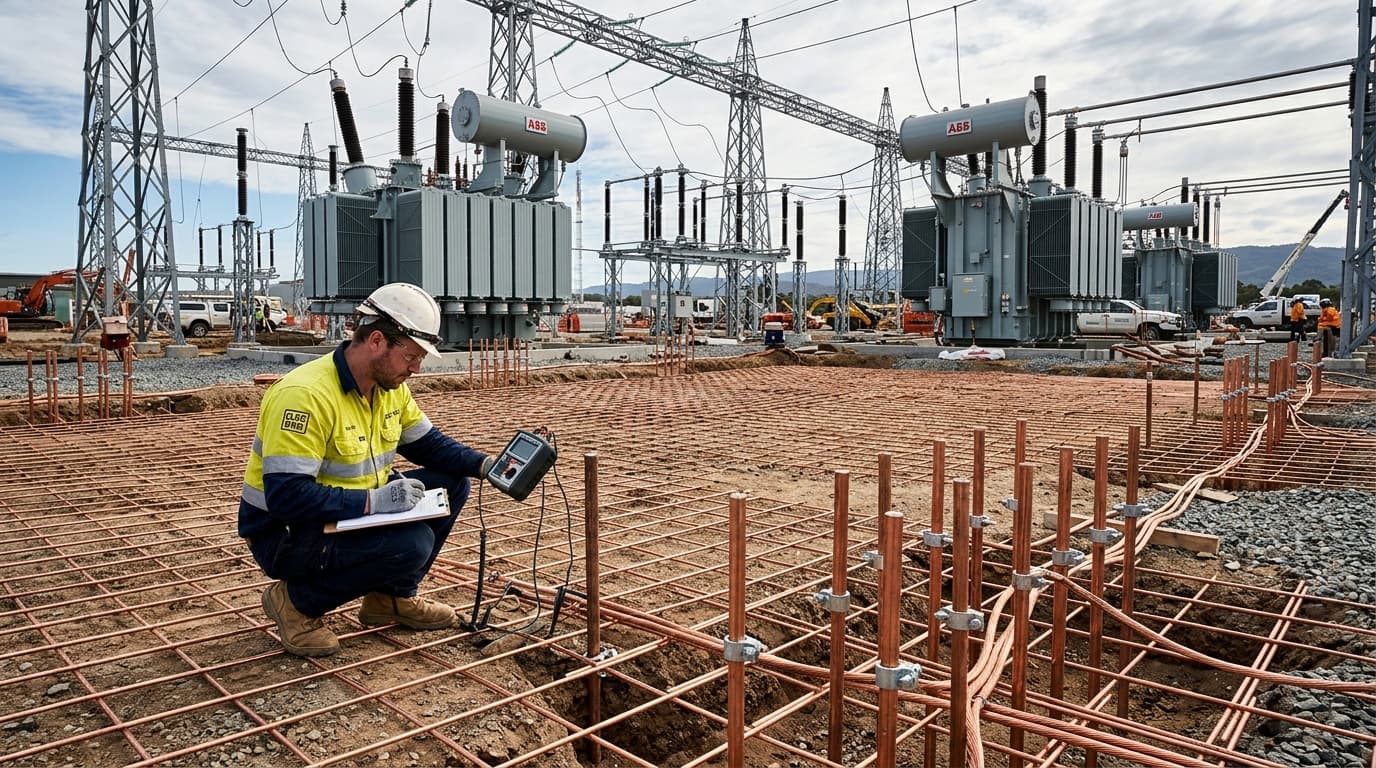
In high-voltage substations, reliable low-resistance grounding is critical for personnel safety and equipment protection. Bentonite compound is widely used around earth mats, rods, and risers to achieve and maintain the required earth resistance values.
Industrial Plants
Factories, process plants, and manufacturing facilities often have complex grounding networks. Bentonite helps ensure stable performance in areas with variable soil conditions or high soil resistivity.
Telecom Towers
Telecom and transmission towers require effective lightning protection and low-impedance grounding paths. Bentonite earthing compound provides a cost-effective and long-lasting solution, especially in remote or elevated sites with poor soil.
Advantages Over Conventional Backfill
| Aspect | Conventional Soil / Sand Backfill | Bentonite Earthing Compound |
|---|---|---|
| Moisture retention | Poor – dries out quickly | Excellent – holds moisture for years |
| Resistivity | High and variable | Consistently low (2–5 Ω·m when hydrated) |
| Contact with electrode | Incomplete, air gaps possible | Intimate contact due to swelling |
| Long-term stability | Can shrink, crack, or wash away | Stable, non-leaching, dimensionally stable |
| Corrosion protection | Limited | Good – buffers pH and isolates electrode |
| Maintenance | May require watering or replacement | Minimal maintenance required |
| Performance in dry soil | Unreliable | Highly effective |
Important Specifications
When selecting bentonite earthing compound, the following parameters are commonly evaluated:
| Parameter | Typical Requirement / Range | Significance |
|---|---|---|
| Base material | Sodium montmorillonite | High swelling & moisture retention |
| Free swelling volume | ≥ 20–25 ml (2 g in 100 ml water) | Indicates swelling capacity |
| Water absorption | High (up to 5× weight) | Moisture reservoir capability |
| Moisture content (as supplied) | 10–14% | Handling and storage |
| pH (2% slurry) | 8.0 – 10.0 | Corrosion protection |
| Particle size | High % passing 200 mesh | Easy mixing and void filling |
| Installed resistivity | 2–5 Ω·m (hydrated) | Direct impact on earth resistance |
| Grit / residue | Low | Better performance and less abrasion |
Always request a recent technical data sheet and test certificate from the supplier.
Conclusion
Bentonite earthing compound is a proven, natural, and cost-effective solution for improving the performance and reliability of electrical grounding systems. Its unique combination of high swelling capacity, excellent moisture retention, and low resistivity makes it ideal for substations, industrial plants, telecom towers, and any installation in challenging soil conditions.
For consistent quality and reliable performance, choose a dedicated earthing-grade sodium bentonite from a trusted manufacturer.
Looking for high-performance bentonite earthing compound?
Contact the Marjaan Minerals technical team for specifications, installation guidance, and bulk supply.