
Bentonite for Lightning Protection Earthing
Lightning protection systems (LPS) are designed to intercept lightning strikes and safely conduct the enormous current into the earth without causing injury, fire, or equipment damage. The effectiveness of any LPS depends heavily on the quality of its earthing (grounding) system.
In many locations, high soil resistivity or poor electrode contact makes it difficult to achieve the low earth resistance required for reliable lightning dissipation. Bentonite, used as an earthing compound, is a proven material that significantly improves the performance of lightning protection earthing systems.
This article explains the role of bentonite in lightning grounding and outlines the key technical considerations.
Lightning Grounding Basics
When lightning strikes a structure, the lightning protection system must:
- Intercept the strike (via air terminals)
- Conduct the current safely down the structure (via down conductors)
- Dissipate the energy into the earth as quickly and safely as possible (via the earth termination system)
The earth termination system is the final and critical link. If the earth resistance is too high, dangerous voltage rises can occur, increasing the risk of side-flashing, equipment damage, and injury.
Standards such as IEC 62305 emphasise the importance of a low-impedance earth connection for effective lightning protection.
Ground Electrode Systems
Lightning protection earthing typically uses one or a combination of the following:
- Vertical earth rods (driven or installed in boreholes)
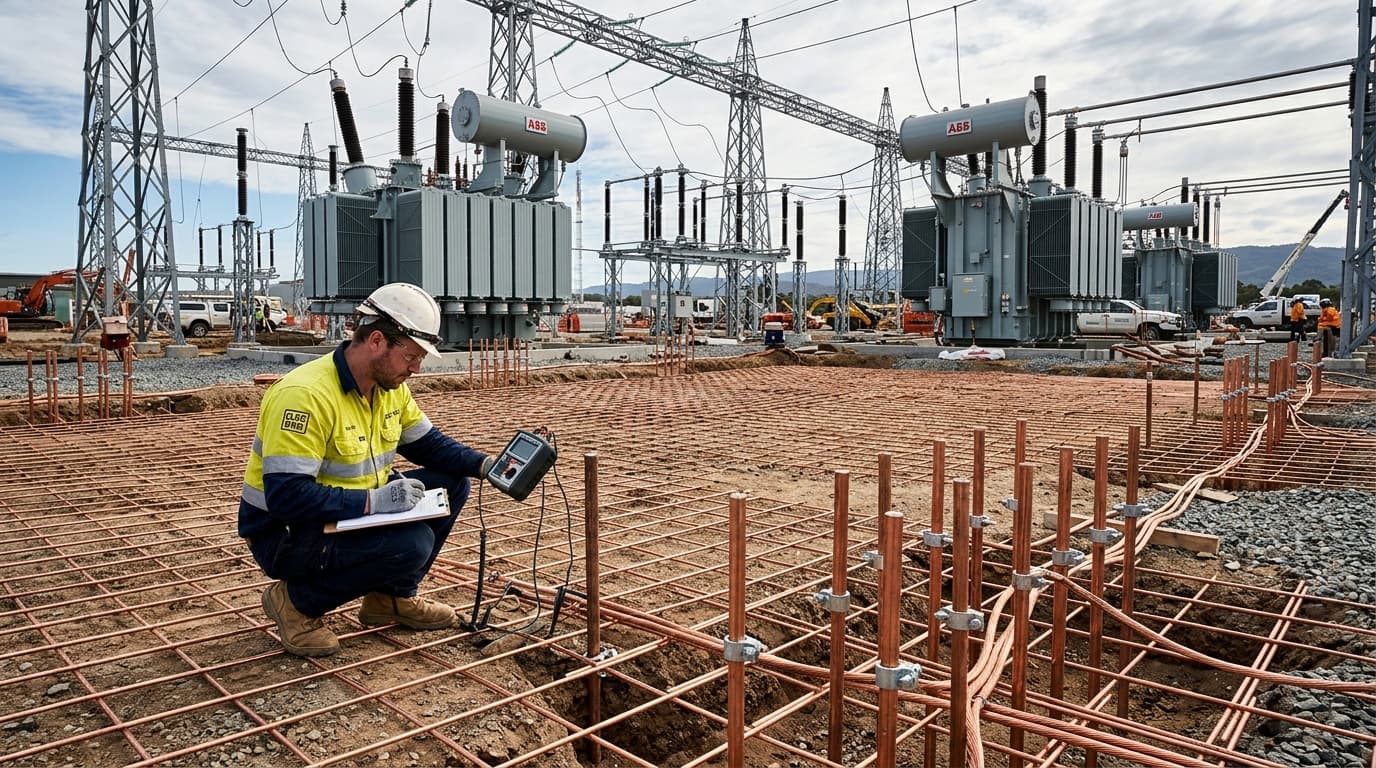
- Horizontal earth electrodes (tapes or cables buried in trenches)
- Earth plates or mats
- Foundation earth electrodes (in some modern designs)
- Ring earth electrodes around the structure
The design aims to achieve a sufficiently low earth resistance (often targeted at 10 Ω or lower, depending on the standard, soil conditions, and risk assessment) while controlling step and touch voltages.
Role of Bentonite
Bentonite acts as a ground enhancement material around the electrodes. When hydrated, it:
- Creates a low-resistivity zone surrounding the metal electrode
- Improves physical and electrical contact between the electrode and the native soil
- Increases the effective size of the electrode
- Helps maintain conductivity even when the surrounding soil dries out
By reducing contact resistance and local soil resistivity, bentonite helps the lightning current dissipate more efficiently into the earth.
Soil Resistivity
Soil resistivity is the dominant factor influencing earth electrode resistance. High-resistivity soils (sandy, rocky, gravelly, or dry) can make it extremely difficult to achieve acceptable resistance values with electrodes alone.
Bentonite addresses this challenge by forming a conductive envelope around the electrode with a typical hydrated resistivity of 2–5 Ω·m — far lower than many native soils. This local improvement has a significant positive effect on the overall earth resistance of the lightning protection system.
Moisture Retention
Lightning earthing systems must perform reliably in all weather conditions, including prolonged dry periods.
Sodium bentonite’s strong moisture-retention capability is a major advantage:
- It absorbs and holds large amounts of water
- It maintains a moist, conductive environment around the electrode
- It reduces seasonal variation in earth resistance
This stability is particularly important for lightning protection, where a sudden rise in earth resistance during the dry season could compromise system performance when a storm occurs.
Installation Considerations
Correct installation is essential to realise the benefits of bentonite in lightning protection systems:
- Fully encapsulate vertical rods in boreholes with hydrated bentonite
- Surround horizontal electrodes in trenches with a continuous layer of the compound where specified
- Mix the bentonite with clean water to achieve a consistent slurry or thick paste
- Avoid air voids by careful placement
- Use sufficient quantity to create a meaningful increase in effective electrode diameter
- Ensure good connection between all parts of the earth termination system
Installation should follow the project design and relevant national or international lightning protection standards.
Why Consistent Material Quality Matters
Lightning currents are extremely high and fast-rising. Any weakness in the earthing system can lead to dangerous voltage differences.
Using consistent, high-quality earthing-grade bentonite ensures:
- Reliable swelling and void-filling performance
- Predictable low resistivity when hydrated
- Good long-term moisture retention
- Minimal risk of corrosion to the electrodes
- Uniform results across multiple electrodes on the same site
Low-quality or inconsistent material can result in uneven performance, higher-than-expected resistance, or premature degradation of the earthing system.
Key quality indicators include high free swelling index, appropriate moisture content, suitable particle size, correct pH range, and batch-to-batch consistency supported by proper documentation (Technical Data Sheet and Certificate of Analysis).
Conclusion
Bentonite is a highly effective material for enhancing lightning protection earthing systems. By lowering local soil resistivity, improving electrode contact, and retaining moisture, it helps ensure that lightning energy is safely and efficiently dissipated into the earth — even in challenging soil conditions.
For reliable, long-term performance of lightning protection systems, specifying and correctly installing high-quality earthing-grade bentonite is a sound engineering decision.
Looking for a trusted solution for lightning protection earthing?
Contact the Marjaan Minerals technical team for technical data, application advice, and supply support.