
What Is Earthing Bentonite? Complete Guide
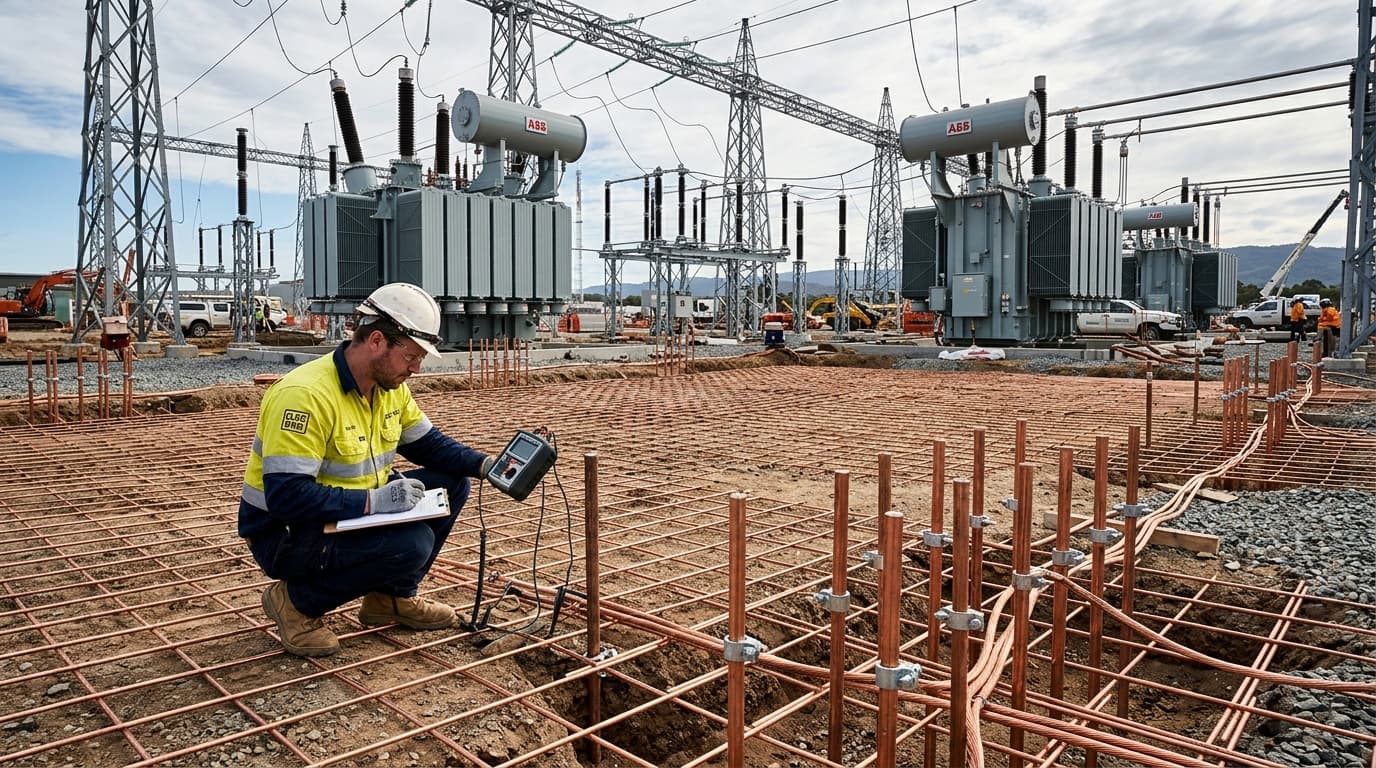
Electrical earthing (or grounding) systems are critical for safety in power installations, substations, telecom towers, industrial plants, and lightning protection networks. In many soils—especially dry, sandy, rocky, or high-resistivity ground—achieving and maintaining low earth resistance is challenging.
Earthing bentonite solves this problem. It is a specialized grade of sodium bentonite clay used as a backfill or ground enhancement material around earth electrodes. When hydrated, it creates a stable, low-resistivity, moisture-retaining zone that dramatically improves grounding performance and longevity.
This complete guide explains what earthing bentonite is, how it works, its key properties, applications, quality parameters, and how to select the right grade.
What Is Earthing Bentonite?
Earthing bentonite is a high-swelling sodium montmorillonite clay specially processed for electrical grounding applications. It is used as a backfill material around copper or galvanized earth rods, plates, mats, or horizontal conductors.
Unlike ordinary soil or chemical compounds that can leach away, earthing bentonite:
- Absorbs and retains moisture from surrounding soil and rainfall
- Swells to many times its dry volume
- Forms a dense, conductive, paste-like layer around the electrode
- Remains stable for years with minimal maintenance
It is commonly supplied as fine powder or granules and mixed with water (or sometimes soil/cement) before installation in boreholes or trenches.
Why Is Bentonite Used in Grounding Systems?
Dry or poor-quality soils have high electrical resistivity, which increases earth resistance and reduces the ability of the grounding system to safely dissipate fault currents, lightning strikes, or leakage currents.
Bentonite addresses this by:
- Lowering soil resistivity around the electrode
- Improving electrode-to-soil contact by increasing the effective surface area
- Providing long-term stability — it does not wash away like salts
- Protecting electrodes from corrosion by buffering pH and preventing direct contact with aggressive soils
- Performing reliably in challenging conditions (rocky, sandy, arid, or high-resistivity ground)
Typical installed resistivity of hydrated bentonite is around 2–5 Ω·m, far lower than many native soils (which can exceed 500–1,000 Ω·m).
Sodium Bentonite Properties for Earthing
Not all bentonite is equal. Sodium bentonite (or sodium-activated montmorillonite) is preferred for earthing because of its superior swelling and water-retention characteristics compared with calcium bentonite.
Key properties include:
| Property | Typical Value / Behavior | Benefit for Earthing |
|---|---|---|
| Swelling capacity | Up to 10–15× dry volume | Fills voids, increases contact area |
| Water absorption | Up to 5× its dry weight | Maintains moisture even in dry seasons |
| Installed resistivity | ~2–5 Ω·m (when hydrated) | Lowers earth resistance significantly |
| pH | Usually 8–10 | Helps protect copper/galvanized electrodes |
| Cation exchange capacity | High | Supports ionic conductivity |
| Non-corrosive & environmentally safe | Natural clay | Long service life, no leaching of harmful chemicals |
Calcium bentonite has much lower swelling and is generally less effective for grounding applications.
Moisture Retention – The Core Advantage
Moisture is the single most important factor controlling soil resistivity. Dry soil is a poor conductor; moist soil conducts well.
Earthing bentonite acts like a permanent moisture reservoir:
- It absorbs water from rainfall and surrounding soil
- It holds that water tightly around the electrode for extended periods
- Even when the surface soil dries out, the bentonite layer remains conductive
This moisture-retention capability keeps earth resistance more stable across seasons and reduces the need for frequent watering or chemical re-treatment.
Soil Resistivity and How Bentonite Helps
Soil resistivity varies widely depending on composition, moisture, temperature, and salinity. High-resistivity soils make it difficult (and expensive) to achieve target earth resistance values (often ≤1 Ω or ≤5 Ω depending on the standard and application).
By surrounding the electrode with a thick layer of low-resistivity bentonite:
- The effective diameter of the electrode increases dramatically
- Contact resistance drops
- Overall earth resistance can be reduced by 30–70% or more in many cases (depending on soil conditions and installation quality)
For example, expanding the effective diameter of a rod from ~15 mm to 150–200 mm with bentonite can lower resistance substantially.
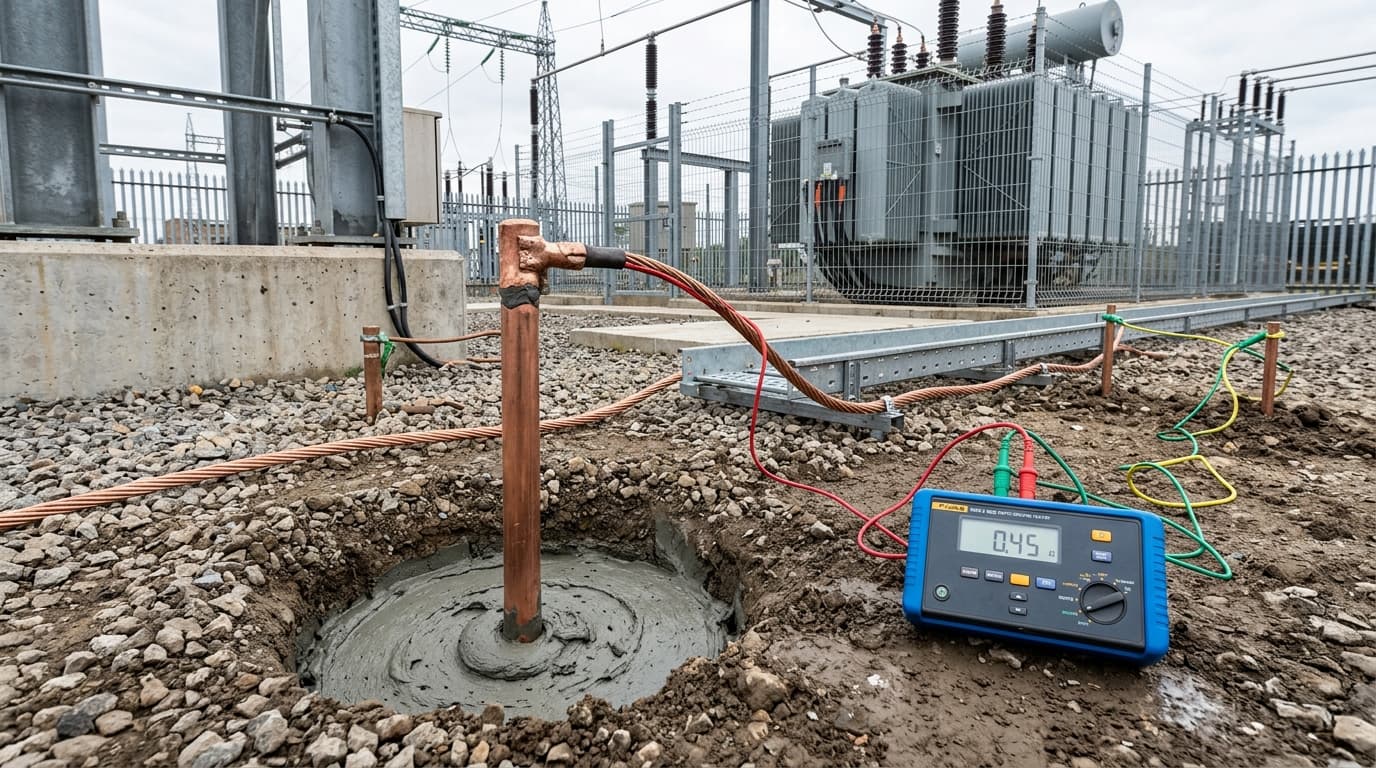
How Earthing Bentonite Surrounds an Earth Electrode
Installation is straightforward:
- Drill a borehole or dig a trench for the earth rod/plate/conductor.
- Place the electrode in position.
- Mix earthing-grade bentonite with water to form a slurry or paste (or use granules and hydrate in place).
- Pour or pump the mixture around the electrode, ensuring complete encapsulation and filling of all voids.
- Backfill the remaining space with native soil if needed and compact.
Once hydrated, the bentonite swells, locks into place, and creates intimate contact with both the electrode and the surrounding soil. It remains dimensionally stable and does not shrink or crack significantly over time.
Applications of Earthing Bentonite
Earthing bentonite is widely used in:
- Power substations and transmission/distribution networks
- Industrial plants and factories
- Telecom towers and data centers
- Lightning protection systems
- Renewable energy installations (solar farms, wind turbines)
- Railway electrification and signaling
- Residential and commercial buildings in high-resistivity soil areas
- Any site where driving deeper rods is impractical due to rock or hard ground
It is especially valuable in arid regions, sandy soils, rocky terrain, and locations with seasonal dryness.
How to Choose the Right Grade of Earthing Bentonite
When selecting earthing bentonite, look for:
- Sodium-based or sodium-activated montmorillonite (not calcium)
- High free swelling index / swell volume
- Good water absorption capacity
- Suitable particle size (fine powder or controlled granules for easy mixing and placement)
- Consistent quality with low grit/impurities
- Supplier technical data sheet and test reports
Avoid generic “drilling bentonite” unless the supplier confirms it meets earthing performance requirements. Dedicated earthing grade or ground enhancement bentonite is formulated and tested specifically for this application.
Quality Parameters for Earthing Grade Bentonite
Typical quality parameters requested by engineers and contractors include:
| Parameter | Typical Requirement | Why It Matters |
|---|---|---|
| Moisture content | 10–14% | Affects handling and hydration |
| pH (2% slurry) | 8–10 | Corrosion protection |
| Free swelling / swell volume | ≥20–25 ml (2 g / 100 ml) | Moisture retention & contact area |
| Water absorption | High (≥300% or better) | Long-term conductivity |
| Particle size | High % passing 200 mesh | Easy mixing and void filling |
| Methylene Blue / CEC | High | Indicates montmorillonite content |
| Resistivity (hydrated) | Low (ideally 2–5 Ω·m range) | Direct impact on earth resistance |
| Grit / residue | Low | Better performance and less abrasion |
Always request a recent test certificate from a reputable supplier.
Ready to Improve Your Grounding System?
High-quality earthing bentonite delivers reliable, low-maintenance, and cost-effective grounding performance even in difficult soil conditions. Contact the Marjaan Minerals technical team for product specifications, installation guidance, or bulk supply inquiries.